Tangerang – Law No. 8 of 2016 on Persons with Disabilities is derived from the mandate of the 1945 Constitution, which guarantees human rights, equality, and accessibility for all citizens, including persons with disabilities. This regulation emphasizes the importance of providing reasonable accommodation so that persons with disabilities can fully participate in social life without discrimination. These principles serve as an essential foundation for various stakeholders, including the business sector, in creating inclusive and equitable learning environments.
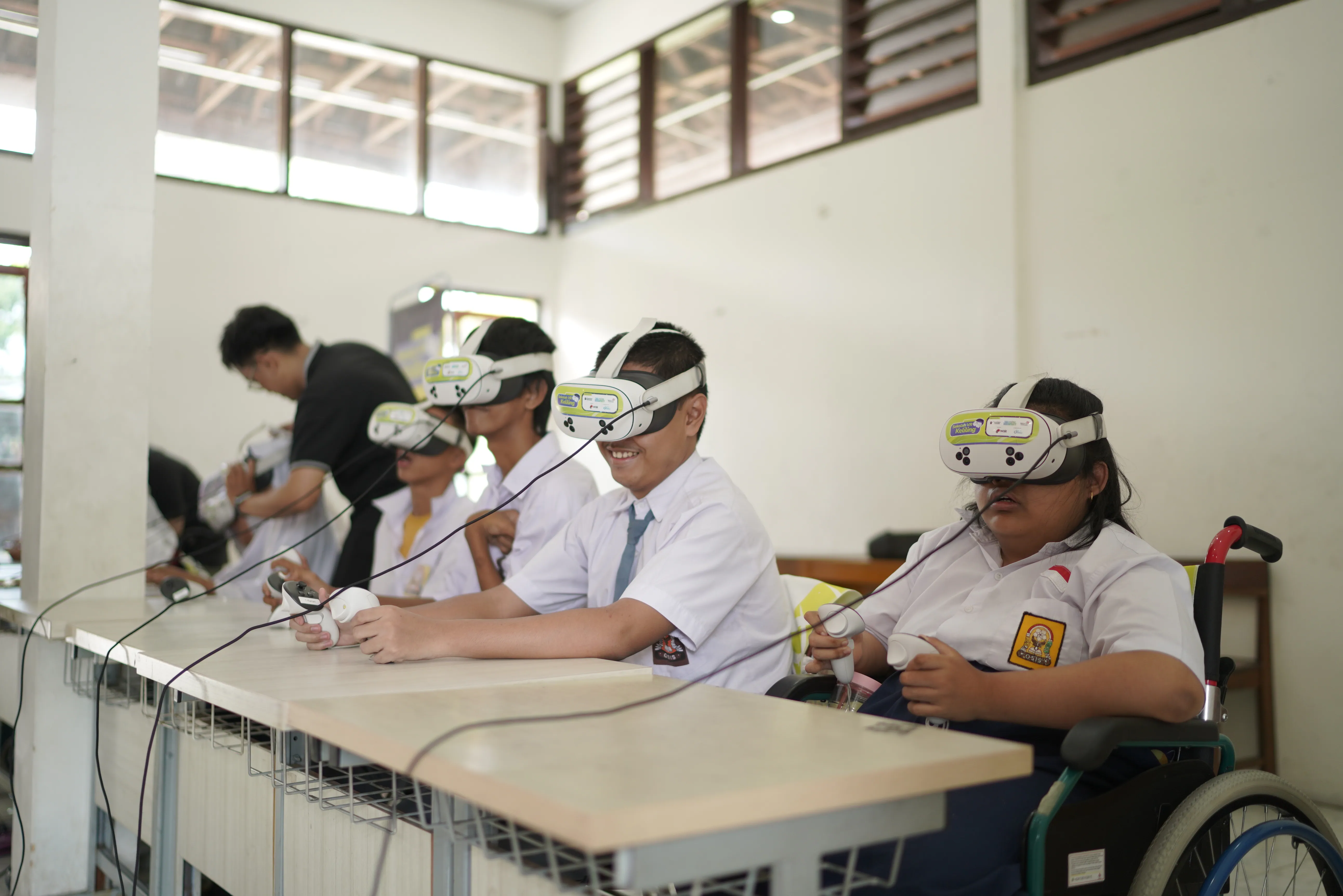
As a leading digital company, Telkom Indonesia, through its Social and Environmental Responsibility (TJSL) program, strives to realize equal access to education. One of these efforts was the implementation of Virtual Reality (VR)-based training held on December 1–3, 2025, at SKH YKDW 01, 02, and 03 in Tangerang. The program involved 200 students with disabilities and was designed to deliver a more interactive, inclusive, and easily understandable learning experience.
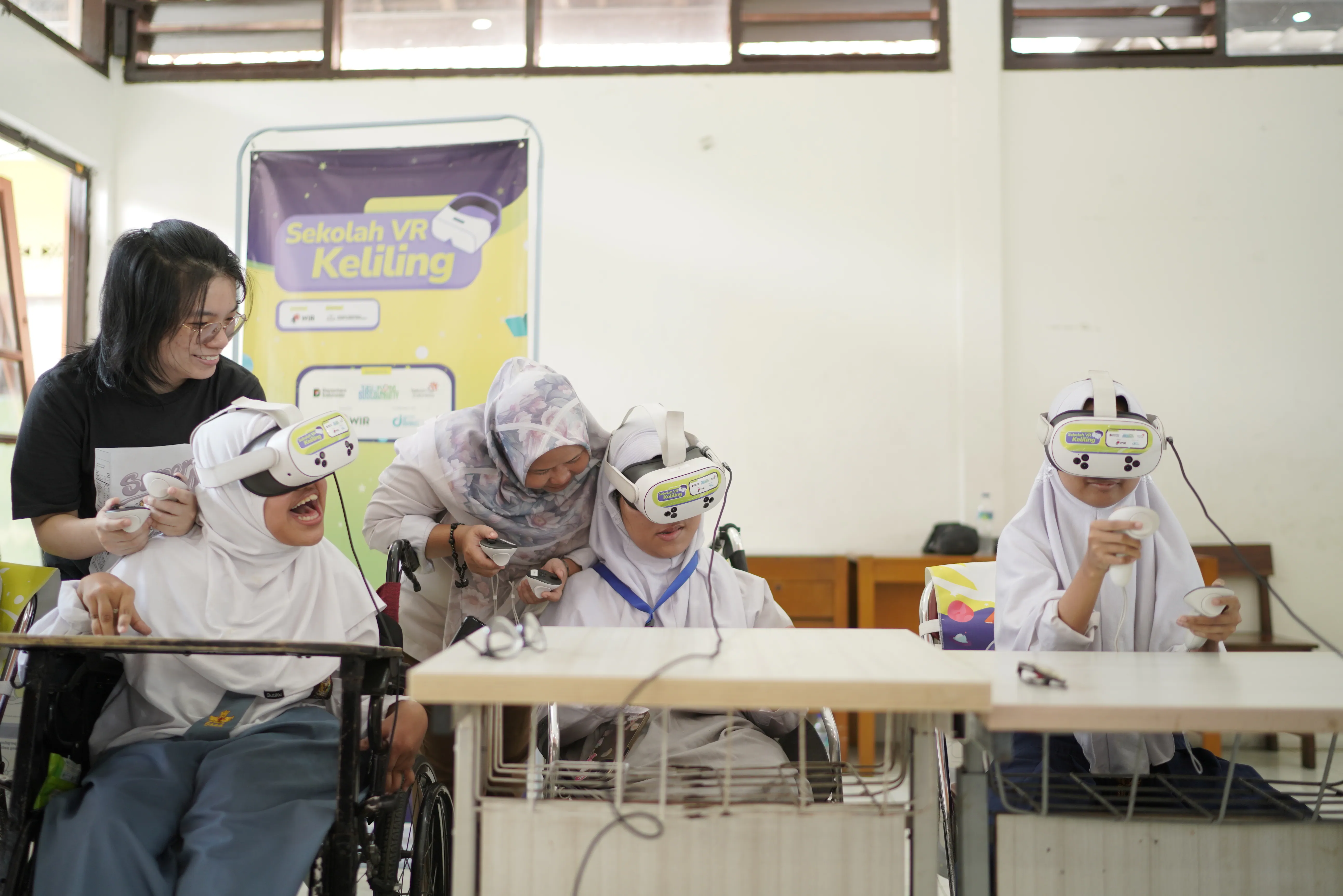
Through VR technology, participants were invited to explore the solar system in a visual and immersive way. This digital approach provided a more engaging learning experience and enabled students to understand outer space concepts more concretely. After the VR simulation, participants created creative projects in the form of solar system drawings based on what they had learned, before presenting their work to their peers. This stage helped develop creativity, conceptual understanding, and students’ confidence in communication.
“As a digital company, Telkom is committed to ensuring that the use of technology delivers the widest possible benefits to society. This training is not only about introducing VR but also about expanding equitable access to learning for students with disabilities. We believe that technology must go hand in hand with humanitarian values and inclusivity. Through collaboration and active employee involvement, every initiative can create consistent and sustainable impact,” said Hery Susanto, Senior General Manager of Social Responsibility at Telkom Indonesia.
This activity is part of Telkom’s TJSL commitment to supporting inclusive and sustainable education and to contributing to the achievement of the Sustainable Development Goals, particularly SDG 4 (Quality Education) and SDG 10 (Reduced Inequalities). Telkom believes that the use of digital technology can create broader learning opportunities for students with disabilities to grow to their full potential.
Through collaboration between companies, schools, and communities, Telkom hopes this initiative will become a sustainable step in building an inclusive education ecosystem that leverages technology for the greater good.
 Whatsapp
 Facebook
 X
X
 Copy News Link